
Using Emerging AI Technology to Create Engaging Digital Stories
Featured Case Study
Genesis of this project
In early 2025, before AI platforms offered automated templates for video podcasts, I conducted a technical experiment to build a simulated interview from scratch. Using a suite of emerging tools—including HeyGen for lip-syncing, ElevenLabs for voice replication, and Dreamina and Kling for visuals—I focused on pushing the boundaries of AI-driven storytelling.
The project presented unique challenges: engineering the subtle “active listening” cues between avatars and, surprisingly, prompting AI to render a simple, realistic podcast microphone. This video is the final result of that integration.
Typical Problems With Digital Storytelling
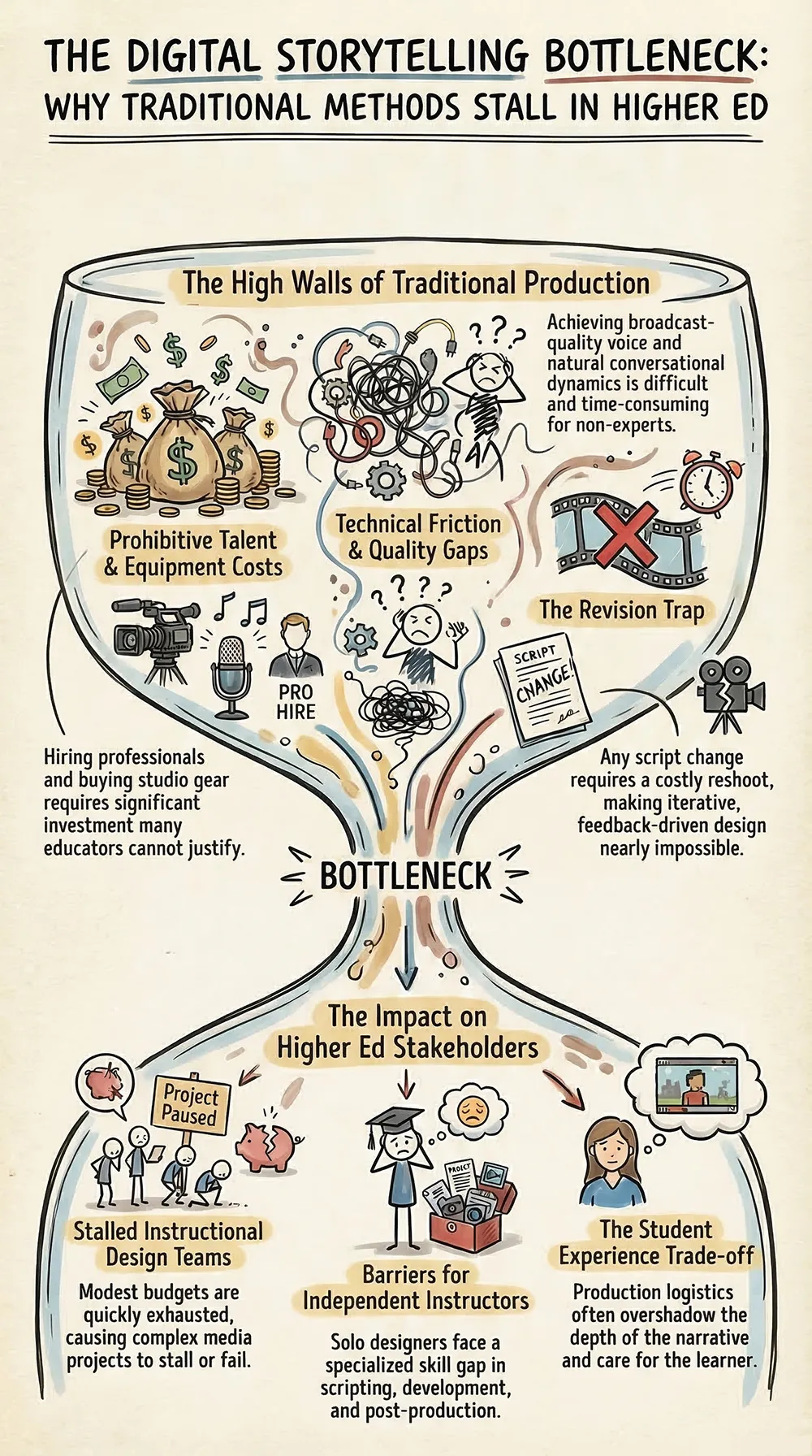
Producing professional digital stories — especially simulated interviews or video podcasts — involves a long list of challenges that can quickly exhaust a modest budget or stall a project entirely. The most common roadblocks are highlighted in this infographic:
Why this approach works
AI is not replacing the instructional designer in this workflow — it is removing the barriers that previously made high-quality digital storytelling inaccessible to individual designers and small teams. Each tool in this pipeline addresses a specific production problem:
- ElevenLabs eliminates the need for professional voice talent by cloning or synthesizing natural-sounding narration;
- HeyGen solves the on-camera talent problem with realistic lip-synced avatars;
- Dreamina and Kling handle visual environment generation and motion, removing the need for a physical set or camera crew.
Critically, AI technology in this space is advancing at a remarkable pace. Features that required painstaking manual workarounds in early 2025 — such as engineering realistic “active listening” cues between two avatars — are rapidly becoming standard, automated capabilities. What once took days of frame-by-frame prompting now takes minutes. This trajectory means that instructional designers who invest in learning these tools today are positioning themselves at the forefront of a production revolution — one where the quality ceiling keeps rising while the cost floor keeps dropping.
A Deep Dive Into The Digital Story Bottleneck
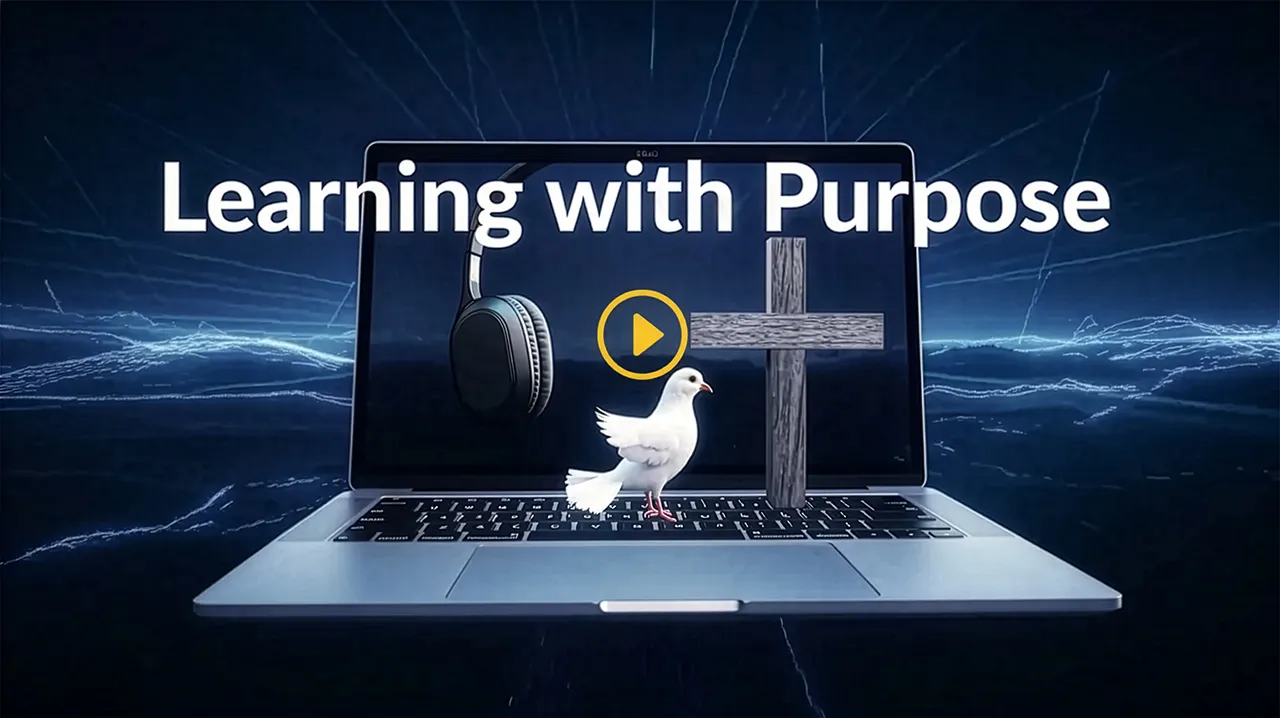
This simulated podcast demonstrates how AI tools can be orchestrated to tell a deeply personal narrative with professional-grade production value.
Read More
The above video podcast demonstrates that the gap between a powerful story and a professionally produced one is closing fast — and that even a small instructional design team can, with creativity and the right AI toolkit, now achieve production quality that once required a full media team. As these tools continue to mature, the bottleneck in digital storytelling is shifting away from production logistics and back to where it belongs: the quality of the idea, the depth of the narrative, and the trauma-informed care taken to serve the learner.